You look in the mirror and your skin just looks… tired. Not sick, not broken — just flat. A little gray. The dark spots from that breakup with sunscreen last summer are still hanging around. You’ve tried brightening creams, spent real money on serums, waited patiently — and still nothing you’d actually call a glow.
That dull, uneven look is one of the most frustrating skin problems because it sneaks up slowly. You don’t notice it until one day the lighting hits differently and you think, when did my skin start looking like this?
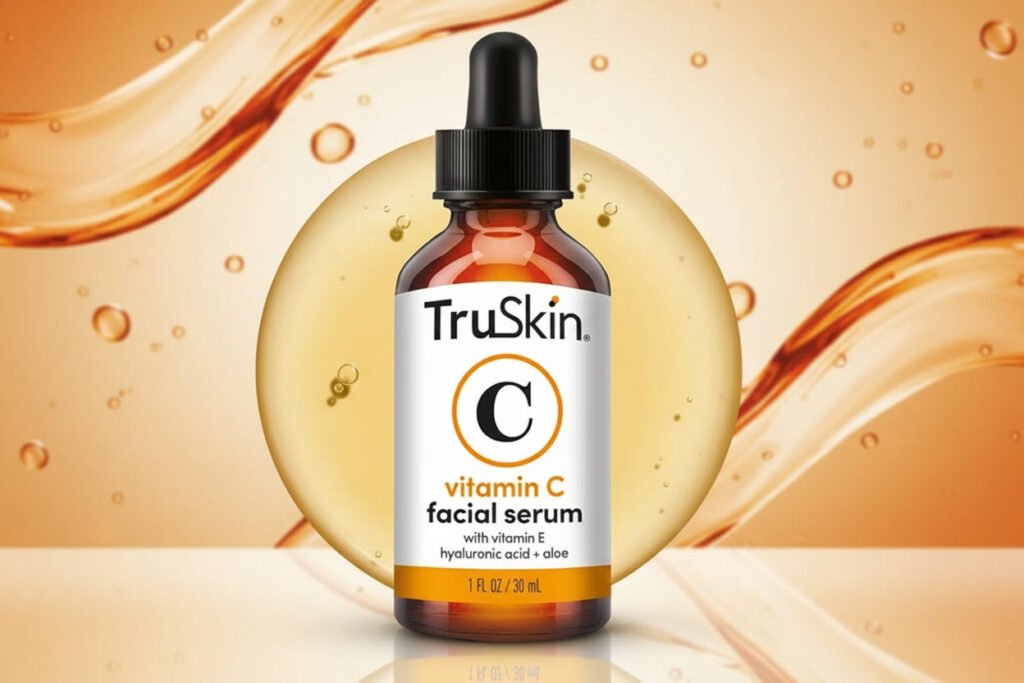
If that sounds familiar, a vitamin C serum might be what’s been missing from your routine — and TruSkin’s version is one that actually has the numbers to back it up. Over 155,000 reviews. A 4.4-star average. That’s not luck.
TruSkin Vitamin C Serum — Quick Overview
| Feature | Details |
|---|---|
| Product Type | Face Serum (Drop Form) |
| Key Benefit | Brightening, dark spot reduction, glow |
| Best For | All skin types — including sensitive skin |
| Main Ingredients | Vitamin C (Sodium Ascorbyl Phosphate), Hyaluronic Acid, Vitamin E, Aloe Vera, Jojoba Oil |
| Results Time | 4–8 weeks of consistent daily use |
| Rating | 4.4 / 5 stars — 155,000+ reviews (Amazon) |
Why Your Vitamin C Serum Might Not Be Working
Most vitamin C serums use L-ascorbic acid — the “pure” form. It sounds impressive, but it’s also notoriously unstable. It oxidizes fast, turns orange in the bottle, and can sting or irritate sensitive skin. You end up with a half-empty bottle of something that’s already degraded.
TruSkin’s vitamin C serum for face uses Sodium Ascorbyl Phosphate instead. It’s a stabilized form that holds its potency longer and is much less likely to cause that burning or flushing some people feel with harsher formulas. For people who’ve had bad experiences with vitamin C before, this difference actually matters.
What’s Inside and Why It Helps
The formula layers multiple ingredients together — not just vitamin C alone:
- Vitamin C — helps fade dark spots and supports natural collagen production
- Hyaluronic Acid — pulls moisture into the skin so it doesn’t feel dry after applying
- Vitamin E — works alongside vitamin C to help protect skin from daily damage
- Aloe Vera — calms irritation and keeps things comfortable
- Jojoba Oil — helps balance the skin barrier without feeling greasy
It’s unscented, paraben-free, cruelty-free, and dermatologist-tested. Made in the USA. The ingredient list is short enough that you can actually read and understand it.
TruSkin Vitamin C Serum — Honest Pros & Cons
| ✅ Pros | ⚠️ Cons |
|---|---|
| Uses stable vitamin C — less oxidation, fewer tingles | Results take 4–8 weeks; not an overnight fix |
| Layered formula with Hyaluronic Acid for hydration | Drop form can feel slightly sticky on oily skin at first |
| Unscented — great for fragrance-sensitive users | Small 1 fl oz bottle — goes quickly with daily AM + PM use |
| Works on all skin types including sensitive | Not the most potent option for advanced hyperpigmentation |
| Dermatologist and clinically tested | |
| 155,000+ reviews — real community trust |
How This Vitamin C Serum Compares
| Factor | TruSkin Vitamin C Serum | Typical L-Ascorbic Serum | Budget Brightening Cream |
|---|---|---|---|
| Key Component | Sodium Ascorbyl Phosphate (stable) | L-Ascorbic Acid (less stable) | Mixed brightening agents |
| Best For | Dark spots, dullness, fine lines | Strong brightening (if tolerated) | Very mild glow boost |
| Form / Type | Lightweight serum (drops) | Serum or oil | Cream or lotion |
| Results Time | 4–8 weeks | 3–6 weeks (if no irritation) | 8–12+ weeks |
| Suitable For | All skin types incl. sensitive | Normal to resilient skin | Normal skin, very mild concerns |
How to Use This Vitamin C Serum for Best Results
This is where a lot of people go wrong — they apply it inconsistently or skip the steps that actually help it work.
Simple Daily Routine with TruSkin Vitamin C Serum
- Cleanse your face and pat dry — don’t rub, just gently press
- Apply 3–5 drops of the vitamin C serum to your fingertips
- Press it gently into your face and neck — don’t rub aggressively
- Wait 60–90 seconds for it to absorb before adding moisturizer
- Finish your AM routine with SPF 30 or higher (non-negotiable with vitamin C)
Morning or Night — When Should You Apply Your Vitamin C Serum?
Morning is generally the better time. Vitamin C helps your skin defend against UV and pollution throughout the day, especially when paired with SPF. Some people use it twice a day, but once in the morning is enough for most.
What to Actually Expect — No Guessing
Week 1–2: Skin may feel a little more hydrated. Don’t expect visible brightness yet — it takes time.
Week 3–4: Texture often starts to feel a little smoother. Some people notice a more even look starting.
Week 6–8: This is when most people see real change in dark spot appearance and overall tone.
Consistency is the only real trick here. Skipping days slows everything down.
What If You Don’t See Results?
Give it a full 8 weeks before deciding. Most people who quit at 3–4 weeks were just about to see the shift. If after 8 weeks nothing has changed, check whether you’re using SPF daily, whether you’re applying it consistently, and whether your skin might have a stronger hyperpigmentation concern that needs a dermatologist’s input — not just a serum.
You can learn more about building a complete skincare routine over at StyleNoraa’s skincare and beauty tools guide for pairing advice that actually makes sense.
Frequently Asked Questions About Vitamin C Serum
Yes — the Sodium Ascorbyl Phosphate form is gentler than L-ascorbic acid and much less likely to sting or flush. Many users with sensitive skin report using it without any irritation.
Yes, it’s designed for daily use. Morning application is recommended so it works alongside your SPF for the best protective and brightening effect.
Most people start noticing a difference around week 4–6 with consistent daily use. More visible dark spots may take closer to 8–12 weeks to show real improvement.
Niacinamide is generally fine to use alongside vitamin C in the same routine, though some people prefer to separate them. Retinol is best used at night while vitamin C is used in the morning to avoid potential sensitivity.
No — it’s completely unscented, which is a real plus for anyone who reacts to fragrance in skincare products.
Absolutely. Skin type and concerns don’t change based on gender — anyone dealing with dullness, dark spots, or uneven tone can use this serum.
Final Thoughts on TruSkin Vitamin C Serum
If your skin looks flat, uneven, or just dull in a way that skincare hasn’t fixed yet — a well-formulated vitamin C serum is probably the missing piece. TruSkin’s version stands out because it uses a stable form of vitamin C that actually lasts in the bottle, layers it with hydrating ingredients that support the skin barrier, and keeps the formula clean and fragrance-free.
It won’t fix everything overnight. But with daily use and SPF, it’s one of the more reliable and affordable options you’ll find at this level of quality. Over 155,000 people can’t all be wrong.
If you want to try it, you can check TruSkin Vitamin C Serum on Amazon here and read through the real customer reviews yourself.